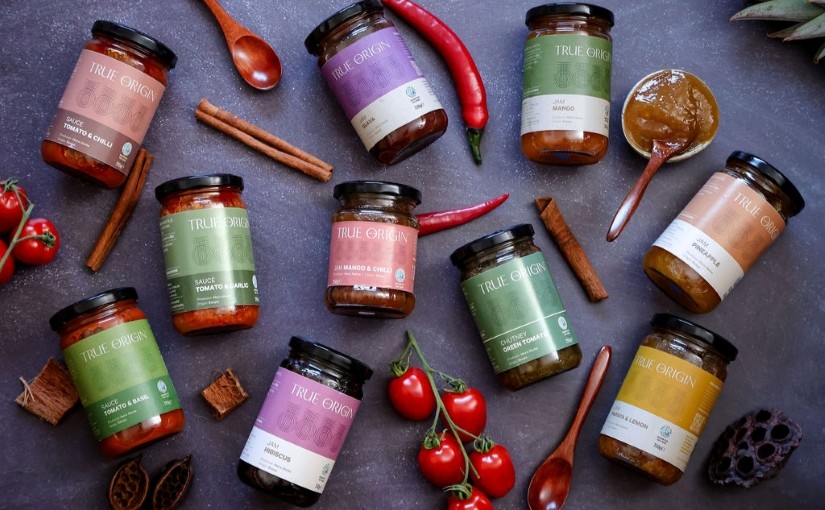
The story behind Meru Herbs

Based in rural Kenya, Meru Herbs began life as part of a community water project. What started as an effort to improve access to clean water has grown into a successful fair trade enterprise producing organic jams, sauces and herbal teas while creating employment and opportunities for local people.

A community-led beginning
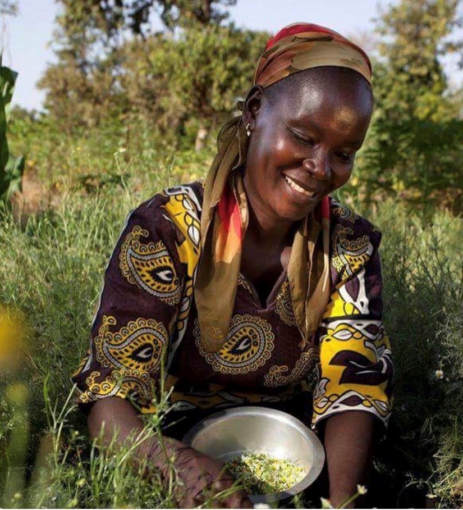
A Meru Herbs producer

The story of Meru Herbs dates back to 1989, when a water project was established to improve access to clean water in the local community.

Once the project was up and running, residents faced an important challenge: how could it be maintained and funded in the long term?

The solution was to create an income-generating business that could support the project while creating local jobs. Meru Herbs was established and began producing value-added food products using ingredients grown by local farmers.

More than 30 years later, the cooperative continues to support both livelihoods and community development.

Creating opportunities through fair trade

From the beginning, Meru Herbs has operated according to fair trade principles, helping ensure that producers and workers benefit directly from the success of the business.

The organisation creates employment opportunities within the local community, particularly for women and young people. These jobs provide income, skills development and greater financial independence, helping families invest in their futures.

Today, hundreds of small-scale producers contribute to the cooperative, supplying ingredients that are transformed into the products enjoyed by customers around the world.

From farm to finished product
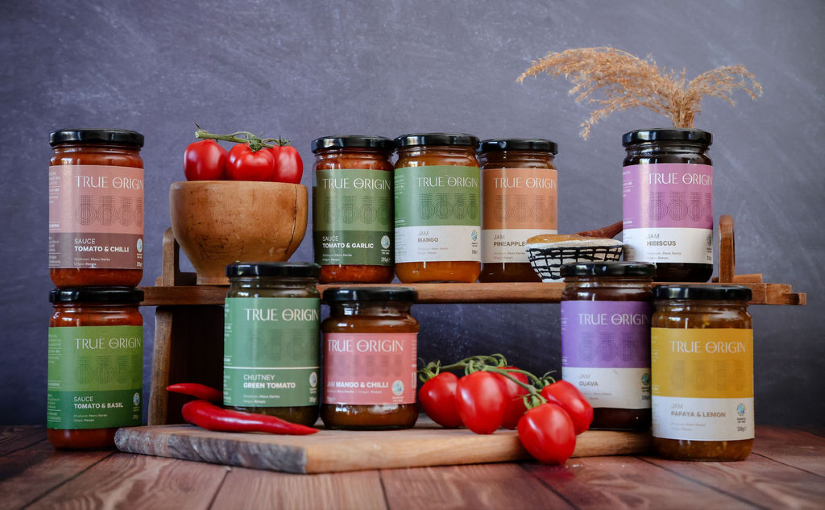
The True Origin Meru Herbs range arranged together on a table against a blue background

Meru Herbs works with local farmers who grow ingredients including tropical fruits, tomatoes and hibiscus using organic farming methods.

These ingredients are carefully processed into a range of jams, sauces and teas at the Meru Herbs production facility. Both the farms and processing unit are organically certified, reflecting a commitment to quality, sustainability and responsible production.

Every stage of the process is carefully managed to ensure the finished products are both delicious and ethically produced.

Working with True Origin

Bringing products from rural Kenya to UK customers requires strong partnerships.

Meru Herbs works with fair trade importer True Origin, an organisation dedicated to supporting producers and helping ethical products reach a wider audience. Through this partnership, Meru Herbs has been able to strengthen quality standards, develop new opportunities and continue investing in the future of the cooperative.

Looking ahead

Meru Herbs continues to look for ways to grow while staying true to the principles on which it was founded. Future plans include supporting more producers, creating additional employment opportunities and expanding the range of products available to customers.

Alongside this growth, the cooperative remains committed to sustainable farming, responsible production and supporting the local community that helped build its success.

Discover the range

From fruity jams and rich sauces to refreshing herbal teas, Meru Herbs products combine great taste with a strong commitment to fair trade and community development.

Explore our True Origin Meru Herbs range and discover the story behind every jar, bottle and box.

Best ethical clothing brands for sustainable summer style

At Natural Collection we’re committed to bringing you the best in sustainable fashion and ethical clothing brands in the UK and beyond. You can focus on finding your style and rest assured we’ve got everything else covered.

From slow fashion clothing to fair trade and eco-friendly materials, these brands are helping reshape the fashion industry for the better.

Check out some of our favourite brands and their ethical credentials below.

Lily & Me – ethical clothing made in their own factory

Close up of a woman wearing a Lily & Me seersucker dress

Transparency and traceability are key issues in the fashion supply chain, but they’re easily solved by simply owning your own factory. That’s what Lily & Me do, meaning they can ensure not just fair pay and good working conditions but also the most eco-friendly manufacturing methods.

In 2024 they were named “Sustainable Brand of the Year” by Boutique Magazine.

Their use of low-impact fabrics and thoughtful design makes them a strong example of ethical summer clothing, from breathable seersucker dresses to timeless wardrobe staples.

Nomads – slow fashion clothing built to last

A woman wearing a pair of Nomads wide leg jeans in green and a green and white frilled top.

In a world dominated by fast fashion and its environmental and social costs, Nomads are proud to embrace the slow fashion label.

Their small-batch clothing is made using sustainable materials such as:

  • Organic cotton
  • Eco-friendly viscose derived from wood pulp

By prioritising durability and ethical sourcing, Nomads help reduce textile waste and encourage conscious consumption. Their wide leg jeans and  frill shirt are designed to be worn for years, not seasons.

Komodo – sustainable fashion supporting rainforest conservation

Close up of a person wearing a komodo jersey top in blue

As members of 1% For The Planet, Komodo donate 1% of their annual sales to environmental causes – specifically the Sumatran Orangutan Society.

Their mission supports rainforest conservation and ecosystem restoration while producing stylish, ethical clothing such as this jersey top and chambray culottes.

Natural World – organic and eco-friendly footwear

The shoemakers at Natural World use only organic raw materials like cotton, cork and rubber. Their centuries-old eco-friendly production process is designed to minimise environmental impact while maintaining comfort and durability.

They create shoes for adults and children alike, all packaged in recycled and recyclable cardboard boxes. Their classic designs like these marino blue sandals will keep your feet cool during the hot weather.

White Stuff – Fairtrade cotton clothing for everyday wear

A close up of a woman wearing a White Stuff striped cardigan

The cotton farmers supplying White Stuff aren’t just paid the Fairtrade Minimum Price – the cooperatives also receive a Fairtrade Premium to fund schooling, healthcare and irrigation systems.

White Stuff are currently the biggest UK fashion retailer of Fairtrade Sourced Cotton and they show no signs of slowing down.

A 100% cotton garment is just the thing for summer – treat yourself to a leaf print shirt or a green stripe cardigan.

Pachamama – handmade knitwear with ethical production

Close up of a woman wearing the Pachamama knitted sun hat

The antidote to mass-produced clothing, Pachamama’s bespoke and ever-changing designs mean you’ll always stand out from the crowd.

Pachamama have formed close relationships with their suppliers and ensure good working conditions and fair pay.

The clothing is mostly produced by villagers who can fit their knitting around other work and family commitments. Knitwear might not be your first thought in warm weather, but a daisy sun hat will keep you nice and cool on a sunny day.

Why choose sustainable fashion brands?

Choosing ethical clothing brands helps reduce environmental impact, supports fair wages, and encourages responsible production methods.

By investing in slow fashion and sustainable materials, you’re helping to create a more responsible and transparent fashion industry.

Explore our full collection of eco-friendly clothing and sustainable fashion brands to shop more consciously this season.

Fashion Revolution Week 2022 –  Money Fashion Power 18th – 24th April

Fashion Revolution Week (FRW) happens every year in the week of the 24th April. The 24th April is the date of the Rana Plaza collapse in 2013; one of the biggest industrial disasters in history.

The Rana Plaza was a building in Bangladesh which housed some major garment factories for some of the biggest fashion brands. It employed around 5000 people and more than 1100 people died when the factory collapsed and an additional 2500 people were injured. Many of the victims were young women.

Every year FRW has a different theme to highlight how problematic and damaging the fast fashion industry is. The theme for this 2022’s Fashion Revolution Week is MONEY FASHION POWER.

Continue reading Fashion Revolution Week 2022 –  Money Fashion Power 18th – 24th April

Fashion Revolution Week 2021 – Rights, Relationships and Revolution

Fashion Revolution Week (FRW) happens every year in the week of the 24th April. The 24th April is the date of the Rana Plaza collapse in 2013; one of the biggest industrial disasters in history.

The Rana Plaza was a building in Bangladesh which housed some major garment factories for some of the biggest fashion brands. It employed around 5000 people and more than 1100 people died when the factory collapsed and an additional 2500 people were injured. Many of the victims were young women.

Every year FRW has a different theme to highlight how problematic and damaging the fast fashion industry is. 2021’s theme is Rights, Relationships and Revolution.

Continue reading Fashion Revolution Week 2021 – Rights, Relationships and Revolution

Who are Traidcraft Exchange?

Traidcraft Exchange’s mission is to use the power of trade to create lasting solutions to poverty.

In theory, trade should be beneficial for everyone involved. As goods and money are exchanged everyone should benefit. However, in global trade this doesn’t happen. In a lot of cases global trade feeds the rich and exploits the poor and therefore traps people in poverty.

Everyone should be paid fairly for their work no matter which country you live in. When trade is done right, no one will live in poverty.

Continue reading Who are Traidcraft Exchange?

Divine Chocolate’s Minty Matcha Chocolate Nut Butter Cups

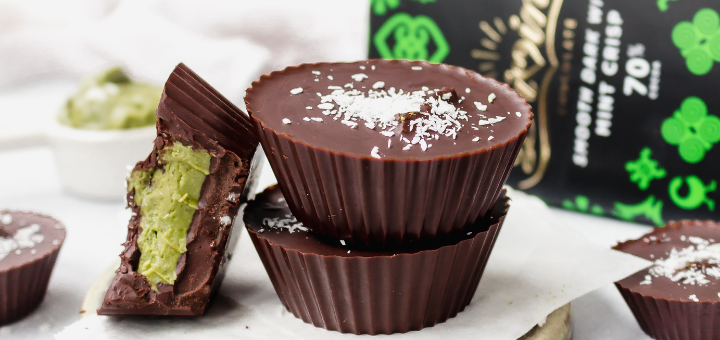
We love these rich and indulgent dark mint chocolate thick-shelled cups by Divine Chocolate. They’re filled with a creamy and vibrant green matcha cashew butter filling. They are easy to make, taste delicious and are naturally vegan, gluten-free and packed with flavour.

Time: 15 minutes plus setting time

Makes: 6 large or 10-12 small cups

Continue reading Divine Chocolate’s Minty Matcha Chocolate Nut Butter Cups

Adinkra: Meaning of the Symbols

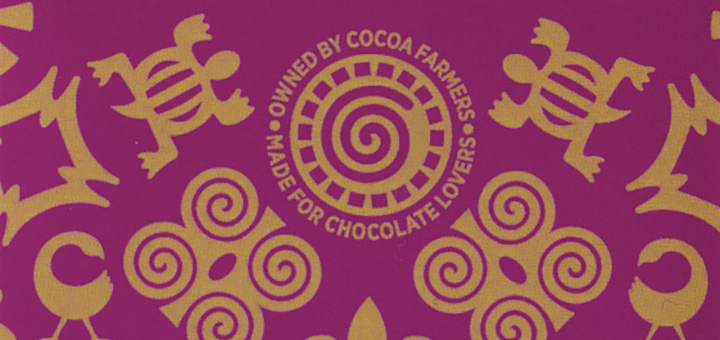
Have you ever wondered what all those symbols on Divine Chocolate bars are? The cocoa farmers in Ghana, who grow the Fairtrade cocoa beans that make Divine chocolate so delicious, are proud of their Ghanaian roots and these symbols are a very important part of their history and culture.

Created in Ghana and Cote d’Ivoire West Africa, they are used in decoration at special occasions. Each holds a special meaning, conveying traditional wisdom and values.

Continue reading Adinkra: Meaning of the Symbols

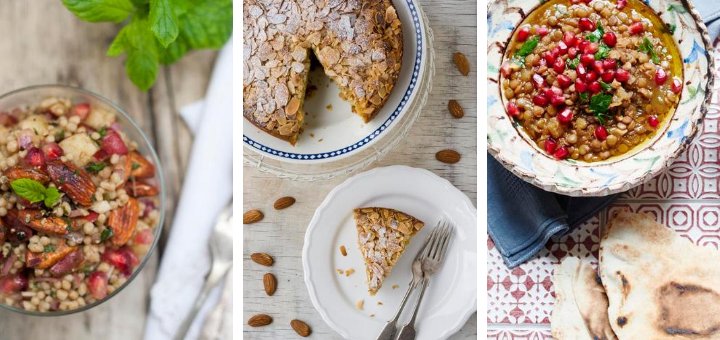
Zaytoun Palestinian Recipes

Zaytoun was founded in 2004 to support the resilience and livelihoods of Palestinian farmers under occupation through fairly trading their olive oil. Zaytoun was initially funded by hundreds of customers who put up payment in advance of receiving their oil, through this they were able to establish themselves as a UK social enterprise.

Since its beginnings, Zaytoun has continued to evolve and develop and by receiving funding from Triodos Bank they now offer a wide range of Palestinian artisan foods and supported Palestinian farmers to pioneer the world’s first Fairtrade certified olive oil in 2009, sold through the UK market.

All of Zaytoun’s products can be used to make some delicious and nutritious plates of food. Take a look at some of Zaytoun’s recipes below:

Continue reading Zaytoun Palestinian Recipes

Zaytoun and its Producers

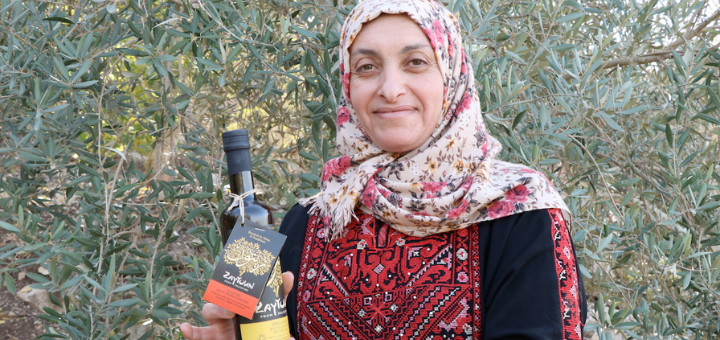
Zaytoun was founded in 2004 to support the resilience and livelihoods of Palestinian farmers under occupation through fairly trading their olive oil. Zaytoun was initially funded by hundreds of customers who put up payment in advance of receiving their oil, through this they were able to establish themselves as a UK social enterprise.

Since its beginnings, Zaytoun has continued to evolve and develop and by receiving funding from Triodos Bank they now offer a wide range of Palestinian artisan foods and supported Palestinian farmers to pioneer the world’s first Fairtrade certified olive oil in 2009, sold through the UK market.

Zaytoun also run two trips a year for customers to visit Palestine and learn more about life for a farming family there and bring producers to the UK once a year for Fairtrade Fortnight.

Read just some of the stories of their amazing producers here:

Continue reading Zaytoun and its Producers

Brand Story: Nkuku

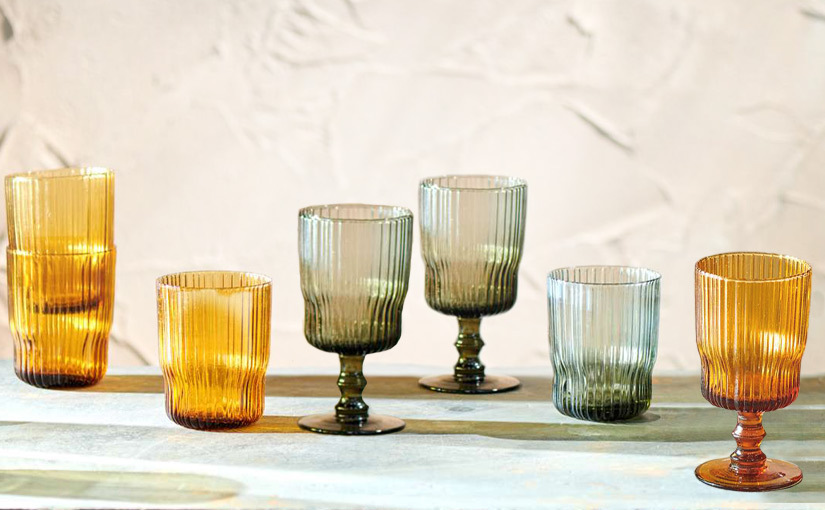
Nkuku produce beautifully handmade home and lifestyle products. Every one of their products has a story to tell through the talented artisans that created them.

Nkuku was founded in 2003 by Ali and Alex Cooke. The brand was inspired after the pair set off on a year-long round the world trip. Through their travels, Ali and Alex were inspired and humbled by the talented craftspeople and their beautiful work. Upon returning from travelling they moved from their busy London home to rural Devon to start their next adventure.

Completely inspired and amazed by their travels, they then started to work with artisans from around the world. Ali and Alex were passionate about supporting and celebrating these artisan skills through bringing their products to a wider audience and sharing their talents with the world.

Continue reading Brand Story: Nkuku